A complete Chesterfield homeowner’s guide to furnace repair
Essential Furnace Repair Guide Keeping your home warm and safe during Chesterfield’s cold months depends on a reliable furnace, and this guide explains exactly how to troubleshoot, maintain, and get professional furnace repair in Chesterfield. You’ll learn how to identify the most common furnace problems, try safe DIY checks, understand when to call a licensed technician, and budget for repairs or tune-ups. This article is tailored for Chesterfield homeowners seeking practical, locally relevant advice on furnace repair Chesterfield and HVAC preventative maintenance Chesterfield. It covers symptom-to-cause mappings, step-by-step troubleshooting, the typical furnace repair process, maintenance checklists, and transparent cost ranges so you can make informed decisions. Read on for quick featured-snippet style answers, checklists, and EAV tables that compare common repairs, maintenance tasks, and cost drivers — all designed to help you reduce downtime, improve energy efficiency, and know when qualified help is required. What Are the Most Common Furnace Problems Chesterfield Homeowners Face? A few recurring failures account for the majority of furnace service calls in Chesterfield: no heat, short cycling, strange noises, ignition or pilot light faults, and airflow issues from clogged filters or a failing blower motor. Each problem stems from a specific component—thermostat or control board failures cause no-heat events, while worn blower motors reduce airflow and efficiency. Recognizing these issues early reduces the risk of emergency breakdowns during cold snaps and helps prioritize repairs that improve AFUE and home comfort. The paragraphs below map symptoms to likely causes and provide safety reminders relevant to local winter conditions. Common furnace problems Chesterfield homeowners see include the following: No heat: The furnace fails to produce warm air despite thermostat call for heat. Strange noises: Grinding, banging, or squealing during operation. Short cycling: Furnace turns on and off rapidly, reducing efficiency and lifespan. Pilot/ignitor issues: Furnace won’t ignite or frequently shuts down mid-cycle. Poor airflow: Weak vents or uneven heat across rooms indicating blower or duct issues. These issues usually indicate component wear or maintenance shortfalls; addressing filters and basic checks can prevent many of them. Understanding these common failures leads directly into identifying symptoms and safe homeowner troubleshooting steps. How to Identify Furnace Issues Like No Heat, Strange Noises, and Pilot Light Problems No heat typically means an ignition failure, thermostat misconfiguration, or electrical supply issue; a simple way to start is to confirm thermostat settings and power to the furnace. Grinding and squealing commonly point to worn bearings in the blower motor or a loose belt, while banging or popping can indicate duct issues or delayed ignition caused by dirty burners. Pilot light or electronic ignitor failures will present as repeated shutdowns or a furnace that won’t light at all; these symptoms may include visible error codes on modern units or persistent cold air from vents. If you detect a gas smell, carbon monoxide alarm activation, or visible smoke, treat the issue as an emergency and follow evacuation and ventilation steps immediately. These symptom→cause mappings make initial triage quicker and safer, and they set up the practical, safe DIY checks Chesterfield homeowners can perform before calling a technician. What Simple DIY Troubleshooting Steps Can Chesterfield Homeowners Try Before Calling a Technician? Before scheduling a furnace repair Chesterfield homeowners can safely try a short checklist that resolves many minor problems without technical tools. First, confirm thermostat mode, schedule, and batteries; then check the circuit breaker and furnace power switch to ensure the unit has electricity. Replace or inspect the air filter—restricted airflow often causes short cycling and noisy operation—then visually inspect vents and pilot/ignitor area for obvious dirt or obstruction while the unit is off. If these steps don’t restore normal operation, avoid opening sealed combustion components and call a licensed professional to prevent safety risks. These safe homeowner steps reduce unnecessary service calls and often restore basic operation, while also pointing to cases where professional diagnostics are the correct next action. When Should You Call a Professional for Furnace Repair in Chesterfield? Knowing when to escalate from DIY to professional service helps keep your household safe and prevents costly secondary damage. Call a professional furnace repair technician when you encounter emergency indicators such as a gas odor, carbon monoxide alarm, visible smoke, persistent lack of heat during freezing conditions, repeated ignition failures, or electrical burning smells. For non-emergencies that you cannot resolve with the simple DIY checklist—like persistent short cycling, strange mechanical noises, or recurring ignition faults—schedule a licensed inspection to diagnose worn components before they fail completely. Trained technicians use diagnostic tools and safety procedures that homeowners should not attempt, which preserves system warranties and reduces risk. If any immediate danger signs appear, follow these emergency steps and seek professional help without delay: Evacuate the home and ventilate if you smell gas. Do not operate the furnace; turn off the power at the breaker if safe. Call emergency HVAC service for hazardous symptoms during cold weather. Because emergencies require immediate action in Chesterfield winters, local 24/7 emergency response is especially valuable during nights and storms. Michigan Heating, Cooling, & Plumbing (operating as Frost & Kretsch Heating & Cooling) provides 24/7 emergency furnace repair and dispatches licensed and insured technicians trained to handle urgent safety situations. This emergency capability reduces downtime and gives Chesterfield homeowners reassurance that a qualified team can respond outside normal hours, aligning with the raw content intent to generate leads and provide reliable service. What Are the Signs That Indicate Emergency Furnace Repair Is Needed? Emergency furnace repair is warranted when safety or immediate habitability is compromised: a strong gas smell, a triggered carbon monoxide alarm, visible fire or smoke, or total loss of heat during a sub-freezing period. Other emergency signs include sparking at the furnace, loud metallic bangs that suggest imminent mechanical failure, and persistent electrical arcing or burning odors. If you encounter any of these signs, evacuate if necessary, ventilate the area if safe to do so, and contact emergency service immediately rather than attempting repairs yourself. These clear red flags separate routine maintenance from situations that can
How seasonal AC service lowers cooling bills in Chesterfield
Cut Cooling Costs with AC Care Hot summers in Chesterfield drive up cooling loads, and neglected air conditioning systems can make bills spike due to reduced efficiency, longer run times, and avoidable faults. This article explains how seasonal AC service—performed before peak cooling months—restores system performance, reduces energy waste, and typically yields measurable savings in the range most homeowners see from routine maintenance. You will learn the specific mechanisms that cause efficiency loss, the standard tune-up tasks that reverse decline, and realistic savings estimates grounded in national energy guidance and local usage patterns. The guide also maps out a homeowner checklist, compares maintenance plans, and highlights complementary upgrades such as smart thermostats, duct sealing, and insulation that multiply savings. Finally, the piece describes what to expect from a trustworthy local provider and answers common questions Chesterfield homeowners ask about frequency, cost, and ROI for seasonal AC service. Read on to understand practical steps you can take this spring to lower cooling bills through targeted maintenance and smart home measures. Why Does Seasonal AC Maintenance Matter for Lower Cooling Bills in Chesterfield? Seasonal AC maintenance matters because accumulated dirt, mechanical wear, and incorrect refrigerant levels reduce a system’s ability to move heat, forcing longer run times and higher energy use. In Chesterfield’s warm months, an under-maintained air conditioner often operates below its rated SEER performance, increasing electricity consumption and shortening equipment life. Routine service restores heat-transfer surfaces, verifies airflow, and corrects refrigerant and control issues so the system can deliver rated cooling capacity with less power. The result is lower run-time, fewer emergency repairs, and steadier comfort levels, which together help household budgets and reduce the frequency of premature replacement decisions. Understanding these mechanisms helps homeowners prioritize the specific tune-up actions that produce the biggest savings. Regular seasonal maintenance addresses the mechanical and airflow problems that cause inefficiency and prepares us to examine the exact tasks technicians perform during a tune-up. How Does Regular AC Tune-Up Improve Air Conditioning Efficiency? A regular AC tune-up improves efficiency by cleaning or replacing components that directly affect heat exchange and airflow, then testing electrical and refrigerant systems to ensure optimal operation. Technicians clean evaporator and condenser coils to restore heat transfer, change or verify air filters to maintain proper airflow, lubricate moving parts to reduce frictional losses, and test capacitors and contactors to prevent electrical inefficiencies. They also measure static pressure and airflow, because restricted flow increases compressor runtime and energy consumption; correcting airflow quickly reduces wasted cycles. These task-level interventions map directly to improved COP and effective SEER performance, meaning the system delivers the same cooling with lower energy use. Knowing these tasks clarifies why even modest service investments can yield multi-percent savings when combined with sensible behavior. What Energy Savings Can Homeowners Expect from Seasonal AC Service? Homeowners can reasonably expect seasonal AC service to reduce cooling energy use by roughly 5–15% depending on system age, baseline condition, and usage patterns. Recent guidance from energy-efficiency authorities indicates that coil cleanliness, correct refrigerant charge, and unobstructed airflow each contribute measurable efficiency improvements, and together they compound into notable monthly savings during peak months. For example, a typical single-family home with a moderately aged system might save enough to lower a summer electric bill by a noticeable amount, with precise results depending on thermostat settings, occupancy, and local weather intensity. Tracking post-service bills and runtime hours provides the best household-specific estimate and helps homeowners decide on recurring maintenance versus larger upgrades. With that in mind, the next section details the comprehensive service steps that produce these gains. Seasonal Energy Efficiency Impacts: Peak Demand and Cooling Savings The evidence from North America also suggests that space cooling in both sectors and C&I lighting may well make greater peak savings relative to non-peak impacts than other measures during summer peak periods, while in winter peak periods, residential lighting can achieve greater peak savings relative to non-peak impacts. This review highlights the significance of regional electricity use patterns along with climatic and regulatory conditions and indicates how further research may contribute to appropriate electricity demand reduction programme design and monitoring regimes in particular regions. Seasonal relationship of peak demand and energy impacts of energy efficiency measures—a review of evidence in the electric energy efficiency programmes, 2016 What Does a Comprehensive Seasonal AC Service Include in Chesterfield? A comprehensive seasonal AC service is a structured sequence of inspection, cleaning, testing, and calibration tasks designed to restore performance and prevent breakdowns. The professional approach covers electrical safety checks, heat-exchange surface cleaning, airflow verification, refrigerant evaluation, condensate management, and thermostat calibration so the system can run efficiently through peak cooling periods. Each step reduces a specific source of energy loss or failure risk, and together they return runtime and capacity toward design expectations. Below is a homeowner-facing checklist that outlines the most common tune-up tasks technicians perform and the practical benefits each delivers. A typical professional tune-up checklist includes these elements: System Inspection: Visual and electrical checks for signs of wear, loose wiring, and safe operation. Coil and Condensate Cleaning: Removing grime from evaporator and condenser coils plus clearing drain lines to prevent blockages. Filter and Airflow Verification: Replacing or confirming correct filter type and measuring airflow and static pressure. Refrigerant and Leak Check: Measuring refrigerant charge, testing for leaks, and verifying pressures against manufacturer specs. Thermostat Calibration and Controls Test: Ensuring setpoints and cycles match actual temperatures and reducing short-cycling. This checklist clarifies the scope of work and sets expectations for homeowners preparing for service. Intro to the service tasks above leads into an EAV table that compares the key service tasks with what they involve and their expected energy or cost benefits. Service Task What It Involves Expected Energy/Cost Benefit Coil cleaning Removes dirt and biological buildup from evaporator and condenser coils to restore heat transfer Improves efficiency by 3–7%; reduces compressor runtime Air filter check Replaces or verifies filter to maintain designed airflow and protect components Lowers fan energy and prevents overload; improves indoor air quality
Why regular AC service prevents expensive repairs
Save Money with Regular AC Service Regular AC service — also called preventative AC service or AC maintenance — is a scheduled inspection and tune-up that keeps cooling systems running within design tolerances to prevent wear, detect small faults, and preserve efficiency. By maintaining correct refrigerant charge, clean coils, and secure electrical connections, regular service reduces the mechanical stress that typically causes expensive component failures like compressor or motor replacements. Homeowners who prioritize preventative AC service see fewer emergency breakdowns, steadier indoor comfort, and lower monthly energy use, which together translate to measurable cost avoidance. This article explains how routine maintenance prevents specific repairs, details the financial benefits and ROI, shows which parts gain the most lifespan from tune-ups, and provides a technician’s AC tune-up checklist to follow. You’ll also find guidance on indoor air quality impacts, refrigerant leak detection, and clear recommendations for how often to schedule service in Michigan’s climate. Throughout, we reference practical actions homeowners can take and where licensed, insured technicians add value to protect your equipment and wallet. How Does Regular AC Maintenance Prevent Costly Repairs? Regular AC maintenance prevents costly repairs by identifying small issues early, restoring operating efficiency, and reducing the stress that drives major component failure. Routine checks correct factors that raise motor load — such as restricted airflow, low refrigerant, and dirty condenser coils — and these corrections shorten compressor run-time and limit wear. Detecting electrical irregularities like loose connections or failing capacitors prevents shorts and motor burnout, while lubrication and mechanical adjustments reduce friction-related failures. The combined effect is fewer sudden breakdowns and a more predictable maintenance schedule that keeps repair costs controlled and equipment reliable. This section breaks down common failure modes that preventative service avoids and shows the maintenance actions that interrupt the failure sequence. This list summarizes the primary mechanisms by which maintenance prevents major repairs: Early fault detection: Regular inspections find leaks, worn parts, and failing electronics before they cascade. Efficiency restoration: Cleaning coils and replacing filters restores heat transfer so the compressor runs less. Mechanical preservation: Lubrication and tightening reduce friction and mechanical stress on moving parts. These mechanisms lead directly to fewer emergency calls and longer service life, so next we’ll look at specific problems that are commonly avoided with preventative service. What Common AC Problems Are Avoided with Preventative Service? Common failures that preventative service avoids include compressor failure, frozen evaporator coils, clogged condensate drains, and electrical component faults that cause sudden shutdowns. Regular maintenance addresses the root causes: coil cleaning prevents ice buildup and overheating, condensate-line clearing avoids water damage and corrosion, and capacitor and contact inspection prevents motor-start failures. Addressing minor refrigerant leaks early keeps the compressor from running starved and overheating, which is a frequent path to compressor replacement. By mapping cause → maintenance action → avoided repair, homeowners can see how small investments in service interrupt expensive repair chains. These specific avoidance outcomes make it easier to prioritize tune-ups before high-demand seasons, and that preventive mindset points to refrigerant issues as another cost driver to catch early. How Does Early Detection of Refrigerant Leaks Save Money? Early detection of refrigerant leaks saves money by preserving system efficiency, preventing compressor damage, and ensuring regulatory compliance for refrigerant handling. Small leaks reduce cooling capacity and force the compressor to run longer; over time this accelerates wear on the compressor and raises electricity bills. Professional leak detection methods such as pressure testing and electronic leak detectors locate leaks that are not visible to homeowners, enabling targeted repairs and recharge to correct charge level. Additionally, licensed technicians handle refrigerants according to EPA Section 608 requirements, which prevents improper practices that could lead to fines or new leaks. Catching refrigerant issues early reduces the total refrigerant consumed, prevents secondary component damage, and keeps your system operating at designed SEER performance — which directly affects household energy costs and component longevity. What Are the Financial Benefits of Regular AC Service? Regular AC service delivers financial benefits across three main areas: avoiding high-cost emergency repairs, lowering energy bills through improved efficiency, and protecting warranty and resale value by maintaining service records. Preventative maintenance is an investment that reduces the probability of catastrophic failures — which are the primary drivers of large, unexpected expenditures for homeowners. Improved system efficiency from clean coils and proper refrigerant charge translates into daily savings on electricity, and consistent maintenance often satisfies warranty requirements that would otherwise be voided by neglect. Together these factors produce a positive ROI by smoothing expenditures and extending the period between major replacements. Below is a concise comparison that highlights maintenance versus common repair outcomes and their typical financial characteristics. Maintenance and repair comparison: Service Type Typical Cost Range Frequency Downtime / Impact Annual maintenance tune-up $75–$300 per visit Annual Low; preventive Common repair (motor/capacitor) $150–$700 As-needed Moderate; potential downtime Major repair (compressor replacement) $1,200–$2,500+ Infrequent High; extended downtime This table shows how relatively modest regular service investments compare to the larger dollar impact and downtime associated with common and major repairs. Consistent tune-ups shift risk away from the expensive tail of catastrophic failures. For many homeowners, the question becomes how to act on this ROI, and that’s where local service plans and reliable technicians matter. Michigan Heating, Cooling, & Plumbing (operating as Frost & Kretsch Heating & Cooling) offers service plans and technician support designed to translate those maintenance advantages into convenient local action. Their licensed and insured technicians provide scheduled tune-ups, and their service model emphasizes transparent pricing and a 100 percent satisfaction guarantee to reduce friction for homeowners seeking preventative care. For property owners focused on cost avoidance, partnering with a local provider who offers emergency coverage and clear service agreements can make scheduling and documentation straightforward and maintain warranty eligibility. How Does AC Maintenance Lower Emergency Repair Costs? Routine AC maintenance lowers emergency repair costs by replacing or adjusting small wear items and by catching intermittent faults before they trigger failure during peak use. For example, a capacitor that tests weak during
Signs you need immediate HVAC repair vs. standard service
Signs You Need Immediate HVAC Repair vs. Standard Service: How to Identify Emergency HVAC Issues and Routine Maintenance Needs An HVAC emergency is any system failure or symptom that poses a safety risk, threatens major equipment damage, or causes severe loss of heating or cooling that requires immediate professional intervention. A standard service refers to routine maintenance, diagnostics, or minor repairs that improve efficiency and prevent future failures but do not present immediate danger. Knowing the difference saves lives, reduces repair costs, and keeps a Michigan home comfortable during seasonal extremes. This guide explains how to spot safety-critical signals—like electrical burning smells, gas odors, major water leaks, or a complete loss of heat in freezing weather—and contrasts those with non-emergency signs such as reduced airflow or slowly rising energy bills. You’ll find quick triage steps, decision checklists for when to call now versus schedule service, symptom-specific tables for fast reference, and practical DIY checks that are safe to try before a technician arrives. Read on for symptom clusters, emergency actions, and sensible maintenance timing tailored for Michigan homeowners. What Are the Most Common Signs of an HVAC Emergency? An HVAC emergency is defined by immediate safety risk, rapid equipment failure, or conditions that threaten occupants’ health; urgent signs include electrical burning smells, gas/rotten-egg odors, major water leaks that contact electrical components, and total loss of heating or cooling during extreme weather. These situations require immediate shutdown of the system when safe, evacuation if there’s a gas odor or suspected carbon monoxide, and contacting professional emergency service. Recognizing these signs early reduces the chance of equipment loss and protects household safety, and understanding the likely causes helps you give clear information to a dispatcher. The following subsections break down key symptoms and provide immediate homeowner actions that prioritize safety and limit further damage. Which Burning Smells Indicate Immediate HVAC Repair Is Needed? A persistent electrical burning smell coming from vents often indicates overheating wiring, a failing motor, or an electrical short inside the furnace or air handler; this smell differs from transient “dust burn-off” after long idle periods. If you detect an acrid or plastic-like burning odor, shut the system off at the thermostat and the breaker, avoid touching components, and ventilate the area if it’s safe to do so; do not restart the system. Electrical burning smells present a real fire risk and require immediate professional diagnostics to locate failing wiring, burned-out motors, or control board faults. Knowing this distinction helps you decide whether to call an emergency technician right away or to schedule urgent next-day service, which is discussed in the next section. How Do Water Leaks Signal Urgent HVAC Problems? Large or persistent water leaks beneath equipment, water pooling near electrical connections, or a rapid increase in condensation indicate serious issues such as a clogged condensate drain, cracked condensate pan, ruptured heat exchanger, or refrigerant-related frosting and thaw cycles. When water is contacting electrical components or flooding, power the unit down at the breaker, isolate the area to prevent slip hazards, and call for emergency assistance; smaller, steady drips that do not contact wiring may be scheduled but still need prompt attention. Rapid water damage can cause corrosion, short circuits, and mold growth—risks that escalate if left untreated—so quick homeowner mitigation and a technician’s assessment are essential. The quick-reference table below helps match visible symptoms to likely causes and immediate actions. Residential HVAC Fault Detection: System Identification Approach Faults in building HVAC systems can have a significant impact on system performance, energy consumption, and occupant comfort. Early detection of these faults is crucial for maintaining system efficiency and preventing potential failures that could lead to costly repairs or complete system downtime. This paper proposes an HVAC fault detection method that uses a recursive least-squares model approach. System identification is a powerful tool for analyzing the dynamic behavior of systems and can be effectively applied to identify faults in HVAC systems. Residential HVAC fault detection using a system identification approach, WJN Turner, 2017 Different leaks and smells require distinct immediate actions and risks can escalate quickly. Symptom Likely Cause Immediate Action Acrid electrical burning odor Overheating wiring, motor failure, electrical short Turn off system and breaker, ventilate, call emergency service Sulfur or rotten-egg odor Natural gas (possible leak) near gas-fired appliance Evacuate, avoid switching electronics, call emergency services Rapid water pooling under unit Clogged condensate drain, cracked pan, ruptured heat exchanger Power down at breaker, contain water, call technician No heat during sub-freezing temps Ignition/fuel issue, major blower failure Use alternative safe heat, contact emergency HVAC service When Should You Call for Emergency HVAC Repair vs. Schedule Standard Service? Deciding whether to call for emergency HVAC repair or to schedule standard service depends on safety risk, weather severity, and whether the problem causes immediate loss of essential heating or cooling; emergencies require immediate action, while non-urgent problems can be scheduled. Use a short decision checklist: if there is a gas odor, electrical burning smell, CO alarm activation, major water intrusion, or complete loss of heat in extreme cold, treat that as an emergency and call now. For uneven temperatures, mild performance drops, or intermittent noises without smells or water, schedule service soon to avoid escalation. The next subsections list AC- and furnace-specific red flags and give safe triage steps homeowners can perform before help arrives. What Urgent AC Repair Indicators Require Immediate Attention? Urgent air-conditioning signs include an electrical burning smell from vents, a strong refrigerant (chemical) odor, heavy water pooling under or around the condenser or air handler, and total loss of cooling during heat waves; each can threaten health, property, or cause rapid equipment failure. If you smell refrigerant (a sweet or chemical scent) or see large amounts of oily moisture, shut off the unit, ventilate the area, avoid open flames, and call for immediate professional assistance because refrigerant leaks both reduce cooling and can indicate component failure. Electrical or burning odors require system shutdown and emergency repair to avoid fires, while large water leaks risk
Chesterfield’s guide to handling after-hours AC breakdowns
After-Hours AC Repair Guide If your AC fails after hours in Chesterfield, immediate action can reduce property risk, protect vulnerable household members, and restore minimum comfort until a technician arrives. This guide explains what to check safely, how to triage symptoms, common failure modes you’re likely to see after dark, and realistic timelines and costs for emergency service calls in Chesterfield. You will learn step-by-step DIY checks, red-flag symptoms that require an emergency response, the typical repairs licensed technicians perform, and maintenance strategies that cut the chance of late-night breakdowns. The article maps local response expectations and available 24/7 services, with unplugged troubleshooting, clear pricing ranges, and decision criteria for homeowners and small-commercial operators. Throughout, we integrate localized guidance for Chesterfield residents, practical safety rules for electrical and refrigerant issues, and pointers on choosing a responsive, licensed provider for urgent AC repair. Why Choose Michigan Heating, Cooling, & Plumbing for 24/7 Emergency AC Repair in Chesterfield? Choosing a provider for after-hours AC service depends on availability, technician qualifications, transparent pricing, and local presence to cut response time. Emergency HVAC issues demand licensed technicians who can diagnose electrical faults, refrigerant leaks, or compressor failures safely and perform on-the-spot temporary measures to protect your property. A reliable response workflow includes a prioritized dispatch protocol, stocked vehicles with common replacement parts, and clear communication about expected arrival and diagnostic procedures. Knowing these service attributes helps Chesterfield homeowners pick a vendor who balances speed with professional safety and clear costs. What Makes Our After-Hours AC Repair Service Reliable and Fast? A dependable after-hours response pairs a dispatch system that triages calls by severity with technicians trained on common emergency failures and safety protocols. Technicians who carry common components—capacitors, contactors, fuses, refrigerant gauges, and diagnostic tools—can often restore partial cooling or stabilize a system until a full repair is scheduled. Short diagnostic loops, immediate safety measures (isolating electrical hazards, containing leaks), and a transparent timeline help homeowners understand next steps. Expect a typical emergency timeline to include troubleshooting, safety isolation, a short-term remedy if possible, and a clear estimate for permanent repair. How Does Transparent Pricing and Satisfaction Guarantee Benefit Chesterfield Customers? Transparent pricing eliminates surprises during stressful after-hours repairs by itemizing diagnostic fees, emergency premiums, parts, and labor before work begins. When providers explain what emergency fees cover—priority dispatch, after-hours pay rates, and travel for late-night calls—homeowners can decide whether to authorize immediate fixes or schedule work for daytime. A satisfaction guarantee that commits to follow-up adjustments or corrections protects you if an initial emergency fix is temporary. These elements—up-front estimates, emergency fee explanations, and satisfaction follow-up—reduce homeowner anxiety and help you authorize sensible emergency repairs. Generate leads for HVAC and plumbing services, provide information about services, and establish trust with potential customers. What Should You Do When Your AC Breaks Down After Hours in Chesterfield? When an AC fails after hours, the right immediate steps emphasize safety, symptom documentation, and temporary comfort measures; this approach limits damage and speeds technician diagnosis. Begin with low-risk checks: confirm thermostat settings and power, inspect the air filter if accessible, and look for visible leaks or ice. Reduce heat load inside the home by closing blinds, running fans, and isolating affected rooms; these measures improve comfort while you prepare for repair. Document noises, smells, and exactly when the failure started—this information shortens diagnostic time and improves the accuracy of emergency interventions. Which Quick DIY Checks Can You Perform Before Calling for Emergency AC Repair? Start with safe, non-invasive checks that help determine whether the issue is a simple control or an emergent mechanical/electrical problem. Verify the thermostat is set to cooling and the batteries are good, check the circuit breaker for tripped breakers (do not repeatedly reset a tripped breaker), and inspect filters for heavy clogging that restricts airflow. Look at the outdoor unit from a safe distance for visible ice, pooling refrigerant, or damaged fan blades, and note any burning smells or loud grinding noises. These observations narrow down likely causes and give the technician actionable details before arrival. Before calling, perform these safe checks to speed diagnosis and avoid unnecessary emergency dispatch: Thermostat Check: Confirm mode, setpoint, and power; replace batteries if needed.Power & Breaker Check: Inspect the main breakers; reset only once if tripped.Filter & Airflow Check: Look for clogged filters or blocked vents that reduce airflow. These simple checks often distinguish between a user-set error and a genuine emergency, improving response effectiveness and helping you decide whether to call for immediate help or schedule daytime service. When Is It Time to Contact a Professional for After-Hours AC Repair? Call for emergency service when you encounter red-flag symptoms that suggest electrical danger, refrigerant exposure, or complete system failure. Red flags include sparking or smoke, a persistent burning odor, repeated breaker trips, refrigerant pooling or hissing, and sudden total loss of airflow combined with high indoor temperatures. If occupants include infants, elderly, or medically vulnerable individuals, prioritize emergency service to restore safe indoor conditions quickly. When in doubt, document symptoms, reduce immediate risks (shut off power to the unit if safe), and call a licensed technician for triage. What Are the Most Common After-Hours AC Breakdowns in Chesterfield? After-hours AC failures commonly fall into refrigerant issues, compressor failures, and electrical component faults—each presenting distinct symptoms that influence homeowner response and technician action. Refrigerant leaks often show reduced cooling performance and ice on the evaporator coil; compressors failing can produce loud grinding or humming and full loss of cooling; electrical faults manifest as tripped breakers, no power to the unit, or intermittent operation. Understanding these failure modes helps homeowners prioritize safety, perform sensible pre-therapies (like improving ventilation), and provide technicians with the observations needed for quick diagnosis. Different failures require different immediate homeowner actions and technician repairs, summarized here for quick reference before a technician arrives. Failure Mode Common Symptom Immediate Homeowner Action Refrigerant Leak Weak cooling; ice on evaporator; oily residue Turn off system, avoid skin contact with fluids, document leak sighting Compressor Failure
Why furnace problems often signal a need for a full HVAC system check
Why Furnace Problems Often Signal a Need for a Full HVAC System Check A malfunctioning furnace is rarely an isolated problem; because a furnace is an integrated component of an HVAC system, faults in the furnace often indicate issues across blower motors, ductwork, thermostats, and safety systems. When one element such as the heat exchanger or blower motor underperforms, the imbalance alters airflow, combustion integrity, and control signals, which degrades comfort and increases risk while reducing efficiency. This article explains why furnace symptoms frequently point to broader system problems, how a full HVAC system check identifies root causes, what inspectors test, when to schedule service, and how to decide between repair and replacement. Readers will learn clear symptom-to-cause mappings, the inspection tools technicians use, safety protocols for carbon monoxide detection, and pragmatic decision criteria that balance energy savings against lifecycle costs. The sections that follow cover common furnace warning signs and their systemic implications, the homeowner benefits of a whole-home HVAC assessment, the component-level inspection checklist and instruments used, recommended inspection timing and cost expectations, cross-system impacts on air conditioning and ductwork, and a structured repair-versus-replace framework to support informed choices. What Are the Common Signs Your Furnace Needs Repair? A common sign that a furnace needs repair is unusual behavior that indicates impaired combustion, airflow, or control systems; these warning signs reveal which subsystem to inspect and what instruments to use to confirm the diagnosis. Strange noises, inconsistent heating, persistent high bills, frequent cycling, odors, and visual cues such as soot or rust each point to likely failure modes like a failing blower, clogged filters, cracked heat exchanger, or thermostat miscalibration. Recognizing these symptoms early helps prioritize a full HVAC check to prevent safety hazards and system-wide damage. Below, a concise list maps common homeowner-observed signs to their immediate implication and the next inspection step. Common furnace warning signs and immediate implications: Banging or popping noises: Suggests delayed ignition or expanding metal; inspect ignition and heat exchanger for stress fractures. Squealing or grinding: Indicates failing blower bearings or belt issues; test blower motor amperage and vibration. Inconsistent heating or cold spots: Points to airflow imbalance or duct leaks; measure static pressure and inspect duct sealing. Yellow pilot light or soot: Signals incomplete combustion; perform combustion analysis and heat exchanger inspection. Frequent on/off cycling: Implies short-cycling due to oversized equipment, clogged filter, or thermostat faults; verify airflow and control calibration. Unusual odors (musty or fuel-like): Could mean poor ventilation or gas leak risk; run CO and gas-pressure safety checks. These signs should prompt a technician to move from symptom-based fixes to a system-level assessment that tests interacting components and safety systems. A comprehensive diagnosis then clarifies whether the issue is localized or reflects deeper HVAC integration problems. Michigan Heating, Cooling, & Plumbing (Frost & Kretsch Heating & Cooling) uses systematic diagnostics to map these symptoms to root causes and prioritize corrective actions, including emergency furnace repair when safety is at risk. Their approach emphasizes rapid response and thorough instrumentation to confirm findings and recommend next steps. Which Furnace Warning Signs Indicate Broader HVAC Issues? When furnace symptoms involve airflow, combustion, or controls, they frequently indicate problems that extend beyond the furnace cabinet and affect the entire HVAC system. For example, persistent short-cycling combined with high energy bills often means airflow restrictions or a mismatched thermostat, which degrade both heating and cooling performance; a technician will therefore test static pressure, filter condition, and thermostat calibration. Similarly, soot, a yellow pilot light, or fuel odors suggest combustion inefficiency or venting problems, which require combustion analysis and vent inspection because a cracked heat exchanger or blocked flue impacts indoor air quality and CO risk. One short case: a homeowner with uneven heating had a failing blower bearing that reduced airflow to several rooms; addressing the blower and rebalancing ducts resolved both heating and AC complaints. Understanding which signs predict broader issues helps prioritize a whole-system check rather than piecemeal repairs, ensuring technicians use the right tools to detect cross-system failures. How Do Strange Noises and Inconsistent Heating Signal HVAC System Concerns? Different noise profiles and uneven temperature distribution reveal likely mechanical and airflow-related faults that affect more than the furnace itself. Loud banging at startup often results from delayed ignition or thermal expansion and may indicate a compromised heat exchanger; this can create safety risks that necessitate combustion testing and visual inspection of exchanger integrity. High-pitched squeals or grinding noises typically come from blower motor bearings or belts, reducing airflow and stressing cooling coils during summer; technicians will measure motor current draw and inspect bearing wear to determine needed repair. Inconsistent heating—where some rooms remain cold while others are warm—usually points to duct leakage, closed dampers, or an undersized blower, prompting duct pressure testing and airflow balancing. Diagnosing these issues requires correlating sound signatures and temperature patterns with component tests, which supports a full HVAC check that restores both safety and balanced comfort. How Does a Full HVAC System Check Benefit Your Home’s Comfort and Safety? A full HVAC system check improves comfort and safety by identifying inefficiencies, detecting safety hazards such as carbon monoxide leaks, and restoring balanced airflow and proper control integration across heating and cooling systems. Technicians evaluate combustion performance, airflow, duct integrity, and control calibration so that system-level fixes—like sealing ducts or tuning blower speeds—deliver quantifiable energy savings and reduce wear on components. The inspection also targets safety-critical elements: combustion analysis, CO testing, and venting checks that directly reduce the risk of hazardous exposure. Collectively, these actions extend equipment life, lower energy costs, and improve indoor air quality, delivering measurable homeowner benefits that justify periodic comprehensive assessments. Benefits of a comprehensive HVAC inspection include: Energy Efficiency Improvements: Calibrating controls and sealing ducts lowers energy use and stabilizes comfort. Safety Assurance: Combustion analysis and CO testing reduce carbon monoxide and combustion risk. Extended Equipment Life: Detecting early component wear prevents cascading failures and costly replacements. Improved Indoor Air Quality: Filter, coil, and duct cleaning reduce particulates and allergen circulation.
Top furnace issues that affect your entire heating & cooling system
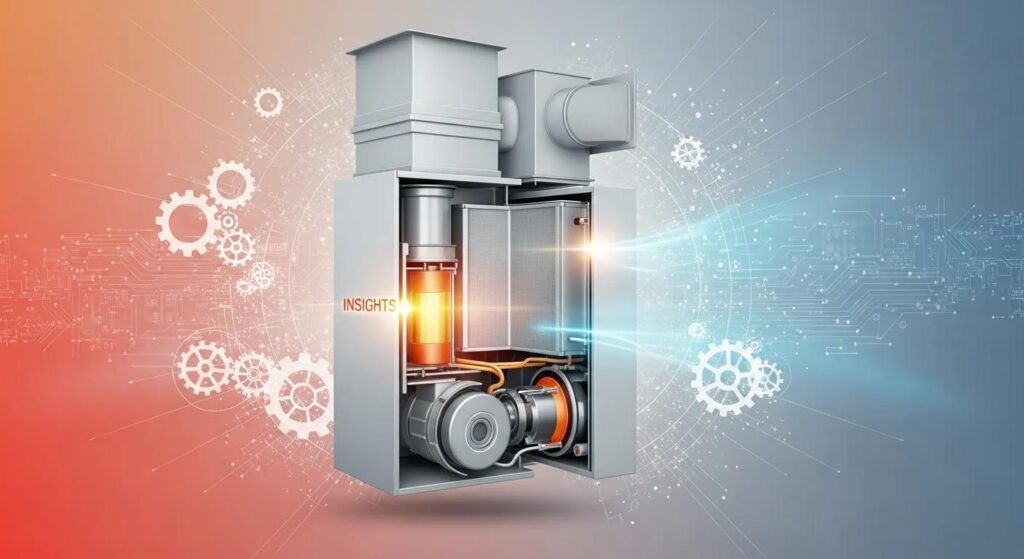
Essential Furnace Repair Insights A furnace problem in Michigan can ripple through your whole HVAC system, reducing comfort, raising energy bills, and creating safety risks during cold months. This guide explains the most common furnace issues, how they affect related systems like air conditioning and ductwork, and practical steps homeowners can take to diagnose and mitigate damage. You will learn symptom-to-cause mappings for key components, safe DIY checks to perform, and clear signals that indicate a professional technician is required. Michigan Heating, Cooling, & Plumbing (operating as Frost & Kretsch Heating & Cooling) serves Macomb County and surrounding cities as a local HVAC specialist; their technicians can diagnose root causes if you prefer a professional assessment or need repairs beyond safe DIY scope. Early in the article we outline major problems and provide a brief, actionable troubleshooting checklist, followed by component-level explanations, maintenance guidance, and when to call for emergency service. This primer maps problems to likely fixes and prioritizes safety for Michigan winters, where cold weather increases risk and stress on equipment. Expect concise, actionable lists, three reference tables linking components to symptoms and fixes, and several step-by-step checks you can do safely. The first substantive section lists the top furnace problems and includes a quick reference table to help you pinpoint issues by component. Later sections address no-heat scenarios, cold air delivery, noise diagnosis, short cycling, safety concerns like carbon monoxide and overheating, maintenance benefits, and when to contact Michigan Heating, Cooling, & Plumbing for emergency support. What Are the Most Common Furnace Problems Impacting HVAC Systems? Most common furnace problems include failure to ignite, blowing cold air, strange noises, short cycling, and safety hazards like gas leaks or carbon monoxide production; each of these faults can reduce system efficiency and strain other HVAC components. Mechanically, failures often trace to parts such as ignitors, pilot lights, blower motors, filters, heat exchangers, and thermostats—each part is a meronym of the furnace assembly and plays a distinct role in heat production and distribution. When one component malfunctions, the HVAC system responds: airflow imbalances compromise air conditioning performance, dirty filters reduce blower efficiency, and cracked heat exchangers present safety and IAQ issues. Below is a quick list of the most frequent problems to help prioritize diagnostics and response in cold-weather climates. No ignition or no heat: furnace fails to start, halting heating for the whole house. Furnace blows cold air: unit runs but delivers insufficient or unheated air. Strange noises: squealing, grinding, or banging that indicate mechanical or combustion issues. Short cycling: frequent on/off cycles that reduce efficiency and increase wear. Safety hazards: gas leaks, carbon monoxide risks, or overheating that require urgent attention. These problem categories guide the component-level mapping in the table below and provide a framework for targeted repairs and preventive steps. Intro to component symptom table: the table below maps key furnace components to observable symptoms and likely repair actions to help you quickly connect household symptoms to probable fixes. Use it as a quick reference while reading the component explanations that follow. Component Symptom Likely Repair / Action Ignitor No ignition, repeated attempts to light Test and replace ignitor; inspect control board if repeated failures Blower motor Weak airflow, humming, squeal Clean motor, tighten belts, replace bearings or motor assembly Air filter Reduced airflow, overheating, short cycling Replace filter, check sizing and return airflow Heat exchanger Soot, odor, CO alarms, visible cracks (if inspected) Immediate shutdown and professional inspection; possible replacement Thermostat Incorrect cycling, no heat despite running furnace Recalibrate, replace batteries, verify wiring or replace thermostat Summary: connecting a symptom to a component accelerates safe troubleshooting and helps determine whether DIY checks are sufficient or if a licensed technician should be called for repair or replacement. Which Furnace Components Cause Frequent Heating Failures? The ignitor, pilot assembly, blower motor, heat exchanger, air filter, and thermostat are the most common component-level failure points in residential furnaces. Each component has a clear function: ignitors and pilot lights provide flame initiation; heat exchangers transfer combustion heat to air; blowers move conditioned air through ducts; filters maintain airflow quality; thermostats control setpoints and cycling. When an ignitor fails, the furnace will not light; when a blower motor falters, air movement drops and rooms remain cold even though the furnace runs. Heat exchanger damage is particularly serious because it creates a pathway for combustion gases to enter living spaces, so signs like soot, unusual odors, or carbon monoxide alarms signal immediate professional intervention. Understanding these component roles helps you prioritize safe checks and know when to stop and call an expert. How Do Furnace Issues Affect Your Whole Heating & Cooling System? Furnace malfunctions cascade into broader HVAC problems by altering airflow, load balance, and system stress, which in turn reduce energy efficiency and shorten equipment life. For example, a clogged filter increases static pressure, which forces the blower to work harder and can degrade both furnace and air conditioner performance during seasonal transitions. A short-cycling furnace does not run long enough to remove humidity efficiently, negatively affecting indoor air quality and comfort and increasing compressor cycling on split systems. Ductwork leaks caused or worsened by high-pressure operation lower delivery to rooms and make the air conditioner compensate, creating an interdependent failure loop. Addressing furnace issues early prevents these systemic impacts and preserves overall HVAC performance and indoor air quality in Michigan homes. Why Is My Furnace Not Heating? Troubleshooting Common Causes If your furnace is not heating, begin with a safety-first checklist: verify thermostat mode and setpoint, ensure power and circuit breakers are on, check the fuse or switch near the unit, and confirm the gas supply is active where applicable. After these external checks, inspect the air filter and vents for obvious airflow restrictions because restricted flow can trigger safety limits that prevent ignition. Component failures like a faulty ignitor or pilot light, a defective gas valve, or a malfunctioning control board can prevent ignition even when power and gas are present. The steps below outline safe
What homeowners should do before calling for emergency AC or 24/7 HVAC repair
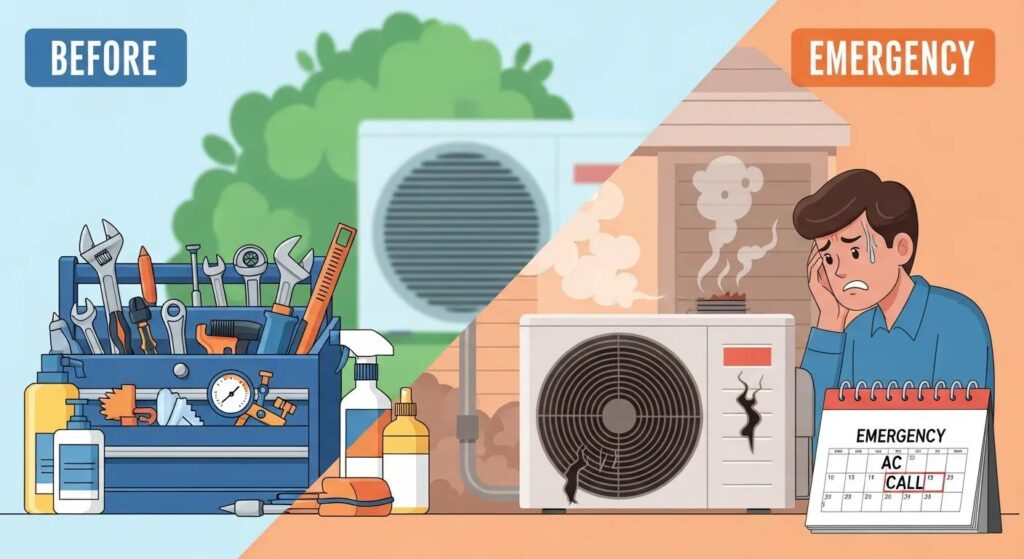
Prepare Before Emergency AC Calls A sudden HVAC failure in the middle of a heat wave or a freezing night is stressful, but the right first steps can protect your home, reduce danger, and sometimes avoid an unnecessary emergency call. This guide gives homeowners a calm, expert-led triage they can perform safely to determine whether an issue is a quick DIY fix or a true emergency requiring 24/7 HVAC repair. You will learn concise troubleshooting steps for common AC and furnace problems, clear electrical safety checks, signs of condensate and outdoor-unit failures, and exact triggers that should prompt a call for immediate professional assistance. The article maps practical how-to actions for thermostats, filters, breakers, condensate drains, and outdoor units, and it explains when to stop DIY troubleshooting for safety reasons. Along the way, keywords like emergency AC repair near me, 24/7 HVAC repair, thermostat troubleshooting, clogged AC drain line, and preventative HVAC maintenance Michigan are woven in to help you find the right guidance quickly and follow a consistent decision flow: try this first → if X happens, call now. Read on for step-by-step checklists, safety-first resets, and a simple table to compare symptoms and fixes before you phone for help. What Are the First Steps to Troubleshoot Your AC Before Calling for Repair? Start by confirming basic controls and visible conditions: many “no cooling” calls are resolved by checking thermostat mode, air filter condition, and outdoor-unit clearance. A focused initial inspection targets the thermostat, filter and vents, outdoor condenser, and the home electrical panel, which together explain most simple failures. These checks are fast and safe when you follow the safety pointers below, and they reduce unnecessary emergency service requests while preserving evidence for a pro if needed. After these quick diagnostics, you’ll know whether the issue is likely user-fixable or indicative of a deeper mechanical or refrigerant problem requiring professional attention. The short checklist below is ideal for a homeowner to complete within 10–20 minutes. This checklist helps you triage the most common AC problems before calling emergency HVAC professionals: Confirm thermostat mode and setpoint: Ensure the thermostat is set to “Cool” and the set temperature is at least 3–5°F below room temperature. Inspect and replace the air filter if dirty: A clogged filter reduces airflow and can cause the system to freeze or shut down. Check the outdoor unit for debris and clearance: Remove loose debris and ensure at least two feet of clearance around the condenser. Verify the HVAC circuit breaker is not tripped: Locate the breaker labeled for the air handler or condenser and reset it only if it’s visibly tripped. Look for water around the indoor unit: Water pooling may indicate a clogged condensate drain that engages a float switch to shut the system down. Complete these steps in order and stop if you detect signs of electrical arcing, burning smells, or refrigerant leaks; those require immediate professional intervention. The next table summarizes these components, expected symptoms, and the most practical quick fixes to try now. Different components produce distinct symptoms and require different initial fixes; use this table as a quick reference during your troubleshooting. Component Common Symptom Quick Home Fix Thermostat Display off or incorrect mode Confirm power/batteries, set to “Cool”, disable schedule, force fan to ON Air filter & vents Weak airflow, system frosting, higher indoor temperature Replace filter, clear obstructions from returns and supply vents Outdoor condenser unit Unit not running, debris buildup, noisy fan Clear debris, ensure two-foot clearance, reset breaker if needed Circuit breaker Tripped breaker, no power to system Safely reset breaker after ensuring dry hands and no burning smell Condensate drain line Water pooling, float switch engaged, system shutdown Clear visible clogs with wet/dry vacuum at drain access; do not use chemicals This comparison gives a rapid decision flow: try the quick fix, observe system behavior for several minutes, and if symptoms persist or worsen, prepare to escalate to professional service. The next subsection explains thermostat checks in detail so you can quickly rule out control issues. How Do You Check and Adjust Your Thermostat Settings? A thermostat problem is often mistaken for a system failure, so start by defining the issue: confirm the device is powered, set to the correct mode, and displaying the correct setpoint. Begin by switching the thermostat to “Cool” and raising or lowering the setpoint to force a call for cooling; on programmable or smart thermostats, temporarily disable schedules that may be preventing immediate cooling. Check battery-operated units and replace batteries if the display is dim or the unit is unresponsive, and verify Wi-Fi connectivity for smart thermostats since lost connectivity can inhibit cloud-based controls. If the thermostat appears powered but the system does not respond after a forced call, turn the fan to “ON” to see if the air handler runs; this helps separate thermostat/communication issues from a system electrical failure. If confusion persists, note the thermostat model and error messages before calling for repair so a technician can diagnose faster. What Should You Inspect on Your Air Filter and Vents? Airflow restrictions from dirty filters or blocked vents reduce cooling capacity and can lead to compressor strain or coil freezing, so inspect filters monthly during heavy use. Open the filter cabinet and hold the filter up to light—if light doesn’t pass through easily, replace it with the proper size and MERV rating recommended by the equipment manufacturer. Walk through rooms checking supply and return vents for furniture or curtains that block airflow, and vacuum visible dust from registers; also confirm return grilles are intact to prevent negative pressure issues. Replacing filters is a low-cost, high-impact action that often restores normal cooling and avoids more serious failures. After restoring airflow, monitor system performance for at least 15–20 minutes to see if temperatures and airflow improve before moving to outdoor or electrical checks. How Can You Identify and Fix Common Power Issues Before Calling Emergency HVAC Service? Electrical problems commonly present as a dead system or intermittent operation, and safe
How Chesterfield HVAC service prevents costly furnace breakdowns
Prevent Furnace Breakdowns Today Furnace breakdowns can leave Chesterfield homeowners facing high repair bills, safety risks, and uncomfortable nights, but targeted preventative HVAC service reduces those outcomes by identifying wear, correcting small faults, and optimizing system operation. This article explains how professional furnace maintenance and timely repair stop minor issues from escalating into major failures, improve efficiency, and protect indoor air quality. You will learn the most common failure modes technicians encounter in Chesterfield, the specific tune-up steps that prevent those failures, and clear signals that require emergency service so you can act quickly. We’ll also cover how efficiency measures such as AFUE and filtration tie into reliability and long-term cost savings, and provide transparent local cost guidance so you can budget for service. Read on for practical checklists, EAV-style tables linking tasks to avoided failures, and concise steps to take during an emergency—each section is designed to give Chesterfield homeowners actionable insight and clear next steps. What Are the Most Common Furnace Problems in Chesterfield That Lead to Breakdowns? Most furnace breakdowns begin with simple symptoms that, left unaddressed, accelerate wear and compound into costly repairs; recognizing these root problems helps homeowners and technicians stop failure progression early. In Chesterfield homes, common faults include airflow restriction, ignition and pilot failures, thermostat miscalibration, heat exchanger deterioration, and blower motor wear—each problem changes system stress and operating patterns and raises the odds of unexpected outages. Understanding how these components interact clarifies why regular inspection and targeted corrective steps are effective at preventing breakdowns. Which Furnace Issues Should Chesterfield Homeowners Watch For? Homeowners can spot early warning signs that often precede failures, such as weak or uneven heat, unusual noises during start-up, higher-than-normal utility bills, or frequent cycling that indicates short-cycling. A quick visual filter check, a thermostat battery and setting review, and listening for grinding or rattling on start-up provide immediate diagnostic clues before calling a technician. Keeping a simple log of when symptoms appear—time of day, weather conditions, and frequency—helps technicians diagnose intermittent faults more quickly. These homeowner checks reduce time-to-repair and help prevent escalation to component damage or complete system failure. How Do These Problems Cause Costly Repairs and Safety Risks? Small issues progress into major repairs through escalating mechanical stress and thermal cycling: for example, a clogged filter causes reduced airflow, which leads to overheating, increased burner run-time, and premature blower motor failure that is costly to replace. Ignition or pilot irregularities can stress control boards and cause repeated attempted ignition cycles, accelerating wear on electronic components and raising the risk of unsafe combustion events. Cracks in heat exchangers not only reduce efficiency but create carbon monoxide risks, requiring immediate professional intervention when suspected. Recognizing the chain from symptom to safety risk helps homeowners and technicians interrupt failure pathways early. Introductory EAV table: the table below links the most frequent problems to their common causes and typical consequences observed in local service visits. It helps prioritize which issues to address first during inspections and tune-ups. Problem Likely Cause Consequence / Typical Repair Range Restricted airflow (weak heat) Dirty air filter, blocked vents, duct obstructions Reduced efficiency, blower strain; repair: $100–$600 depending on duct access Ignition or pilot failure Faulty ignition control, dirty burners No heat, repeated ignition attempts; repair: $150–$500 Thermostat malfunction Calibration drift or wiring fault Short-cycling, uneven heating; repair/replace $75–$300 Heat exchanger cracks Corrosion, thermal stress CO risk, replacement often required; repair/replace $1,000–$3,000 Blower motor wear Bearing failure, accumulated debris Loud operation, loss of airflow; repair/replace $300–$1,200 This table demonstrates how small, observable faults map to both safety concerns and predictable cost ranges; addressing root causes during maintenance dramatically lowers the probability of these outcomes and reduces emergency repair frequency. Machine Learning for Predictive HVAC Maintenance ABSTRACT: AbstractThis comprehensive research endeavors to explore the integration of machine learning algorithms as a transformative solution for predictive maintenance in Heating, Ventilation, and Air Conditioning (HVAC) systems. The escalating demand for efficiency and sustainability in building practices has necessitated innovative approaches, and this study focuses on the proactive utilization of machine learning in HVAC system management. The investigation delves into the latest advancements in machine learning, offering a nuanced examination of its applications within HVAC systems. By predicting maintenance needs, these algorithms play a pivotal role in ensuring system reliability, optimizing energy efficiency, and contributing to substantial cost savings. The research not only scrutinizes the technical aspects of machine learning integration but also emphasizes its practical implications for HVAC systems. Real-world applications and case studies will be explored to illustrate the efficac Machine learning algorithms for predictive maintenance in HVAC systems, 2023 How Does Preventative Furnace Maintenance in Chesterfield Save You Money? Preventative maintenance reduces operating costs and prevents expensive emergency repairs by restoring efficiency, catching wear before failure, and extending useful service life. Regular tune-ups improve combustion efficiency, reduce blower power draw, and stop minor faults from cascading into major replacements, which together lower both fuel and repair expenses. What Does a Comprehensive Furnace Tune-Up Include? A comprehensive tune-up inspects, cleans, adjusts, and tests every component that affects safe, efficient operation: filter replacement, burner cleaning, heat exchanger inspection, blower assembly lubrication and balance, thermostat calibration, flue and vent checks, and a carbon monoxide test are standard items. Technicians also run a combustion analysis when applicable to verify safe fuel-to-air ratios and identify inefficient burning that wastes energy and stresses parts. Each task targets common failure mechanisms—for example, burner cleaning reduces ignition problems while blower balancing minimizes bearing wear—so the net effect is fewer breakdowns and longer equipment life. These specific steps are why an annual professional visit is a high-value preventative measure. Introductory EAV table: the next table connects common maintenance tasks to the issue they prevent and the typical benefit a homeowner sees, quantifying how tune-ups translate to savings and reliability. Maintenance Task Prevented Issue Estimated Benefit Change air filter Airflow restriction Improves efficiency 5–15% and reduces service calls Burner cleaning Ignition/pilot failure Fewer start problems and lower fuel waste Heat exchanger inspection Undetected cracks Prevents
Common AC problems and how professional repair restores cooling fast
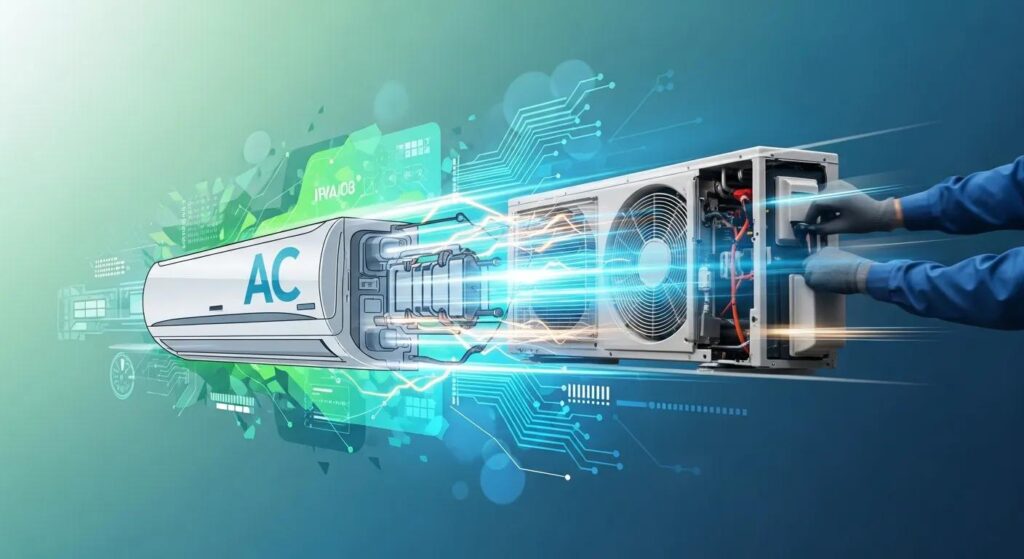
Fast Solutions for AC Issues A home’s air conditioning is the most visible measure of comfort during Michigan’s hot months, and when cooling fails the consequence is immediate discomfort and sometimes property risk. This article explains the most common AC failures homeowners encounter, the underlying mechanisms that cause warm air or system shutdowns, and practical triage steps you can take before a technician arrives. You will learn how low refrigerant, restricted airflow, frozen coils, strange noises, and clogged condensate drains each disrupt heat exchange and reduce cooling capacity, plus which signs indicate an emergency. The guide also describes how professionals diagnose refrigerant leaks, follow EPA-compliant repair and recharge procedures, and restore reliable cooling quickly. Read on for symptom checklists, step-by-step professional actions, prioritized urgency guidance for Macomb County homeowners, and targeted preventative maintenance to reduce repeat failures. Why Is My AC Not Cooling? Common Causes and Quick Fixes An AC that runs but won’t cool is usually failing at the heat-exchange process: either the refrigerant loop, airflow across the evaporator coil, or the compressor/electrical controls are impaired. Low refrigerant reduces the system’s ability to absorb heat, dirty filters and coils restrict airflow and heat transfer, and compressor or electrical faults prevent the system from meeting load demand. Addressing these issues quickly restores cooling efficiency, lowers energy use, and prevents secondary failures like freeze-ups or motor burnout. Below we outline homeowner checks that often resolve simple problems and show when professional diagnostics are required to safely repair components and restore capacity. What Are the Symptoms of an AC Not Cooling Properly? Recognizing symptoms early helps prioritize response and can avoid higher repair costs later. Common signs include warm air from supply vents despite the thermostat being set lower, weak airflow compared with normal operation, and longer run cycles that don’t achieve set temperatures. Homeowners may also notice uneven cooling between rooms or a rapid rise in energy bills that correlates with reduced cooling output. These indicators often point to filter/airflow problems or refrigerant loss and should prompt basic checks before escalating to professional service. Typical homeowner checks for cooling symptoms include: Verify thermostat set to “cool” and setpoint below room temperature. Inspect and replace a dirty air filter if clogged. Confirm outdoor condenser is free of debris and the breaker is on. These simple checks solve many airflow-related problems and help determine whether a technician is needed for pressure or electrical diagnostics. Different causes produce different symptom patterns; the table below helps compare causes, observable signs, and immediate homeowner actions to triage the problem. Cause Symptom(s) Immediate Homeowner Check Low refrigerant Weak cooling, long run times, ice on evaporator coil Check for ice, do not chip or pry; turn system off and call pro Dirty air filter / clogged coil Weak airflow, higher humidity, uneven cooling Replace filter and clear returns; check for improved airflow Compressor or electrical failure System won’t start, tripping breakers, loud humming Check breaker panel and thermostat batteries; avoid repeated resets Thermostat miscalibration Incorrect cycle behavior, incorrect temperature reading Recalibrate or replace batteries and verify settings This table helps homeowners decide immediate steps and signals when to escalate to professional diagnostic tools and refrigerant handling. What Causes an AC to Freeze Up and How Can Professionals Fix It? A freezing AC occurs when the evaporator coil temperature drops below freezing and condensation solidifies, which prevents normal heat absorption and ultimately reduces cooling or shuts down the system. The two primary mechanisms are restricted airflow across the coil and abnormally low refrigerant pressure; both produce colder-than-intended coil surfaces. Professionals restore proper operation by safely thawing the coil, restoring correct airflow, and correcting refrigerant charge or leak repairs so normal evaporative temperatures return quickly. Understanding the common causes and professional remediation steps helps homeowners avoid repeat freeze-ups and associated water damage. Which Symptoms Indicate a Freezing AC Unit? Freeze-up is visible and often urgent: you may see ice on the indoor evaporator coil or refrigerant lines, water pooling as the ice melts, and significantly reduced airflow or cool air output. The system might cycle erratically, trip circuit breakers, or run continuously without achieving cooling goals. Immediate homeowner action is to turn off the AC to allow thawing and prevent compressor damage, then arrange for professional diagnosis because freeze-up often masks the underlying problem. A rapid professional visit can prevent compressor failure and restore safe operation. Immediate homeowner steps when detecting freeze-up: Turn off the air conditioner at the thermostat and leave the fan on to speed thawing. Place towels or buckets under the indoor unit to catch meltwater and reduce water damage. Avoid trying to mechanically remove ice from coils to prevent damage to fins and tubing. These measures reduce secondary harm while preparing for a professional repair visit, which typically follows thawing and pressure testing. Restoring the system requires both correcting the immediate cause and verifying refrigerant levels and airflow so the coil operates within designed temperature ranges going forward. How Does Restricted Airflow and Refrigerant Levels Lead to Freezing? Restricted airflow—caused by clogged filters, blocked returns, or failing blower motors—reduces the amount of warm air moving across the evaporator coil, allowing coil surface temperatures to fall below freezing and condensation to freeze. Low refrigerant lowers evaporator pressure and temperature, producing the same freezing outcome even with normal airflow. Professionals measure airflow and refrigerant pressures, inspect blower performance and duct restrictions, and then correct the imbalance through filter/coil cleaning, blower repairs or refrigerant service. These interventions restore the heat-exchange equilibrium so that the coil warms above freezing during operation and freeze-up risk is eliminated. Professional diagnostic actions include: Measuring static pressure and airflow to confirm restrictions. Performing refrigerant pressure checks and leak detection when low charge is found. Cleaning evaporator coils or replacing failing fan motors to reestablish proper airflow. Accurate diagnosis prevents repeated freeze events and protects the compressor from long-term damage, which is essential for dependable cooling. How Are Refrigerant Leaks Detected and Repaired by Experts? Refrigerant leaks degrade cooling performance and are both an